Galaxy Evolution and Cosmology (GECO) is a research initiative focused on galaxy evolution and cosmology made possible by generous seed funding from the Provost and Dean’s office at UVA. The relevant themes include resolved stellar populations, near-field cosmology, the dark universe, and galaxy formation and evolution, from both theoretical and observational perspectives. UVA is a member of the LSST-Discovery alliance, SDSS, and has access to a range of telescope apertures and wavelengths (including LBT, MMT/Magellan). The UVA astronomy faculty have strong research ties to the scientific staff at the National Radio Astronomy Observatory (NRAO), which is located on the grounds of the University.
Current GECO Fellows
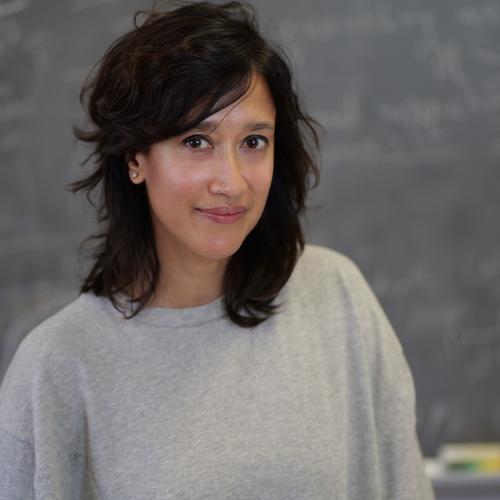
Image

| Andrew B. Pace’s research centers on near-field cosmology, using the structure and kinematics of Milky Way and Local Group dwarf galaxies, star clusters, and stellar streams to study dark matter and galaxy formation. His work combines dynamical modeling, proper motions, stellar populations, and tidal/orbital analyses to infer the mass profiles and evolutionary histories of low-mass galaxies and their relation to the Milky Way halo. |
Image

| Niusha Ahvazi’s research focuses on the formation and evolution of low-mass galaxies, especially Milky Way dwarf satellites, using semi-analytic models and cosmological simulations to connect galaxy properties to their underlying dark matter halos. Her work emphasizes faint dwarf galaxies, environmental effects, baryonic-physics uncertainties, and how small-scale galaxy populations can be used to test dark matter and galaxy-formation models. |
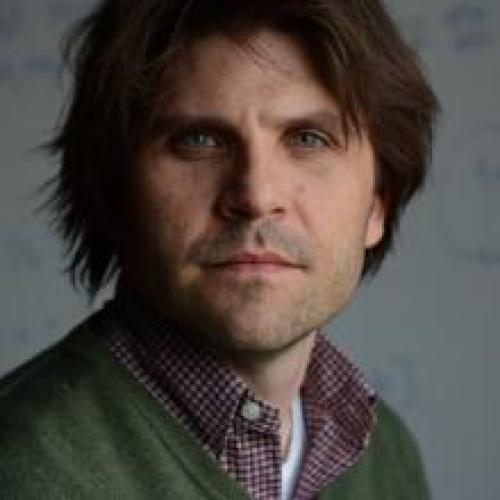
Image

| Xiaowei Ou’s research uses stellar kinematics and chemistry to study the Milky Way’s formation history and dark matter distribution, combining large survey data, high-resolution spectroscopy, and cosmological simulations. Her work connects dynamical modeling of the Galactic potential with chemo-dynamical studies of accreted stellar populations and dwarf galaxies, with an emphasis on using the Milky Way as a near-field laboratory for galaxy formation and dark matter physics. |
| Jan Burger is joining from the Max-Planck-Institute for Astrophysics in Garching. Jan is an expert in the development, execution, and analysis of massively parallelized simulations on high performance computing machines. He is currently a leading member of the “Learning the Universe” collaboration, where he has spearheaded the development and deployment of (i) a new model for the interstellar medium and (ii) a new model for the growth of supermassive black holes. | |
| Cosima Eibensteiner is joining as a Jansky Fellow at NRAO. Cosima’s research focuses on cold neutral (molecular/atomic) interstellar medium in nearby galaxies. She's investigating the interplay between the content of neutral atomic gas, (dense) molecular gas, and star formation, and how this gas contributes to the formation of stars. | |
| Mairéad Heiger will be joining UVA as a GECO/CosmicAI Fellow from the University of Toronto. Her research focuses on galaxy evolution and galactic archaeology, with an emphasis on chemical evolution in dwarf galaxies. Mairéad will use simulation-based inference to constrain the chemical evolution of galaxies. Mairéad brings expertise in observational galaxy formation that will connect the galaxy formation models, likelihood free inference, and cutting-edge observations. | |
| Matt Siebert will be joining from STScI. Matt is studying the explosive deaths of stars in the universe. More generally, he is interested in astronomical transients and has used a large variety of ground- and space-based resources to obtain their follow-up observations across the EM spectrum. He has supported this work by developing a spectroscopic reduction pipeline tailored for optical observations of transients. | |
| Andreas Tersenov is joinning from the Institute of Computer Science and the Institute of Astrophysics, FORTH in Greece, and at the CosmoStat lab of CEA Saclay in France. His research focuses on understanding the large-scale structure of the Universe through the effect of weak gravitational lensing, using simulation-based inference, mass mapping techniques, higher-order statistics, and probabilistic machine learning models. Beyond research, Andreas organizes and teaches at the Astrostatistics Summer School in Crete, and contributes to open‑source cosmology software. |
Graduate Students
Image

| Andrés Almeida’s research focuses on the Magellanic Clouds and Local Group dwarf-galaxy dynamics, using Gaia astrometry together with APOGEE radial velocities and chemical abundances to study stellar populations, tidal structure, and galaxy interactions. His work on the Small Magellanic Cloud interprets distance and kinematic substructure as evidence of tidal perturbation by the Large Magellanic Cloud, connecting resolved stellar data to the dynamical evolution of interacting dwarf galaxies. |
Image

| Kaia Atzberger’s research focuses on near-field cosmology and stellar archaeology, using spectroscopy and resolved stellar populations to study ultra-faint dwarf galaxies and stellar streams. Her work on stellar streams and ultra-faint galaxies uses chemical abundances and photometric metallicities to study the stream originating from a disrupted ultra-faint dwarf galaxy, connecting stream morphology with its progenitor density profile. |
Image

| Jonathan Kho’s research focuses on galaxy formation and black-hole seeding, using cosmological simulations to study how different seed models imprint themselves on black-hole demographics and scaling relations. His work with the BRAHMA simulations connects early black-hole formation, high-redshift quasars, and local black-hole–galaxy relations, and he is also involved in developing large suites of simulated galaxies for testing galaxy-formation models. |
Image

| Yanbo Pan’s research applies modern statistical methods to astrophysical problems, with work spanning ultra-faint dwarf galaxies, binary-star orbits, and exoplanet systems. His current interests sit broadly in observational near-field cosmology, using quantitative modeling of resolved stellar systems to study low-mass galaxies and stellar populations. |
Undergraduate Students
Image

| Zara Callahan’s research uses the large TNG-300 cosmological hydrodynamical simulation to study satellite galaxy populations and cumulative stellar mass functions of CenA-mass galaxy groups. Her work examines how satellite populations vary with group properties, including the relationships between group characteristics and the number and stellar mass of satellites within each group. |
Past Students and Fellows
Image

| Christopher Garling is moving to the Space Telescope Science Institute. |
Image

| Aklant Bhowmick is moving to Florida International University. |
Image

| Núria Torres-Albà is moving to the Institute of Space Sciences - CSIC in Spain. |
Image

| Alex Garcia is moving to the Center for Astrophysics at Harvard. |
Cross-disciplinary Opportunities
GECO strives to be a space for innovation, including as a nexus for art and design.
- With William Wylie, Commonwealth Professor of Art, we are developing a series of cyanotype prints made from spectrographic plates that were used in the Sloan Digital Sky Survey’s APOGEE experiment. Whilst these cyanotypes depict beautiful star charts, they also capture and render the quite technical (and mostly opaque to the larger community) way in which astronomical surveys are planned and executed, all in the form of a tactile, approachable, object.
- With Katy Marks, Founder of the award winning London-based architecture firm Citizens Design Bureau (@citizensdesignbureau) that specializes in conservation of museums, performing arts centers and other community venues, we are developing a “brief” to figure out how to depict in design (possibly via installation space) the concept that we only know about 4% of the Universe.